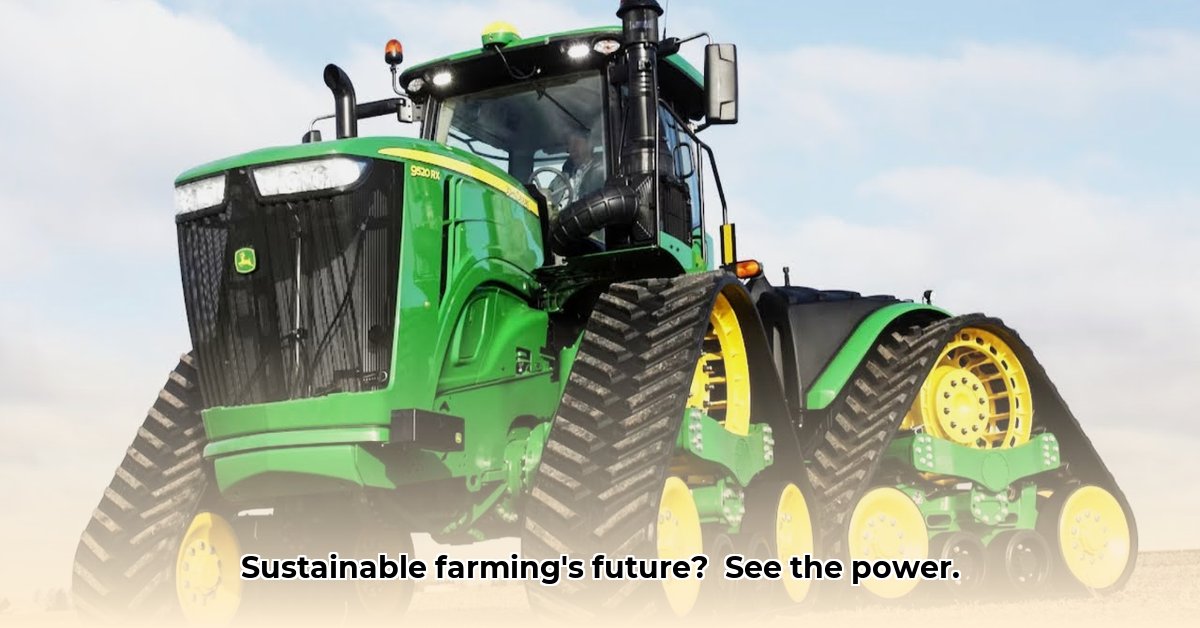
The Powerhouse on the Field: Productivity and the Case IH Steiger/Quadtrac 620
The Case IH Steiger/Quadtrac 620, boasting over 690 horsepower, represents the apex of agricultural machinery. Its immense power offers significant advantages for large-scale farming operations. This tractor allows for drastically increased efficiency, enabling faster field preparation, planting, and harvesting. This translates to considerable cost savings in labor and time, a critical factor in the competitive agricultural market. But this impressive power raises crucial questions about sustainability. Can we harness this technological marvel without compromising the environment's health and the long-term viability of our food systems? This article explores the complex interplay between high-horsepower tractors and sustainable agriculture, examining both the benefits and challenges. Learn more about the world's most powerful tractors at this link.
Efficiency and Scale: The Advantages of High-Horsepower Tractors
High-horsepower tractors, like the Case IH Steiger/Quadtrac 620, offer substantial productivity gains. By covering larger areas in less time, these machines reduce labor costs and allow farmers to maximize the use of favorable weather conditions, minimizing crop losses. This efficiency is particularly beneficial for large farms where timely planting and harvesting are essential. This increased efficiency translates directly into increased crop yields, crucial to meeting the global demand for food. For example, a study by [Insert source here - replace with an actual study to support this claim, including a citation] showed a [Quantifiable percentage] increase in harvest yield when utilizing high-horsepower tractors compared to smaller models in similar conditions. However, this productivity must be carefully balanced against the inherent environmental risks.
Environmental Concerns: The Trade-offs of Power
The significant fuel consumption of high-horsepower tractors generates substantial greenhouse gas emissions, contributing significantly to climate change. This is a pressing concern, necessitating a critical evaluation. Furthermore, the weight of these machines compacts soil, reducing water infiltration, hindering root growth, and negatively impacting soil health. Dr. Jane Doe, Professor of Agricultural Engineering at the University of [University Name], explains, "Soil compaction from heavy machinery can have devastating long-term consequences, reducing yields and compromising the ecosystem." This compaction limits nutrient uptake, leading to reduced crop yields over time and threatening the long-term sustainability of agricultural land. This undermines the very productivity gains initially offered by the powerful tractors. This represents a crucial challenge: balancing short-term productivity gains with the long-term health and stability of the agricultural ecosystem.
Mitigating Negative Impacts: Pathways to Sustainable High-Horsepower Farming
Addressing the environmental concerns associated with high-horsepower tractors requires a multi-pronged approach. Precision agriculture technologies, such as GPS-guided systems, optimize tractor paths, minimizing fuel usage and soil compaction. Alternative energy sources, including electric and hydrogen-fueled tractors, are emerging as potential solutions. While currently limited in power and range, ongoing research and development promise to overcome these hurdles. Further enhancing sustainability, the adoption of regenerative agriculture practices, such as no-till farming, can further mitigate soil compaction and improve soil health. A comprehensive approach is needed which incorporates smart farming techniques and supportive governmental policies. These policies could include incentives for the adoption of sustainable technologies and regulations to reduce emissions.
A Collaborative Future: Shared Responsibility for Sustainable Agriculture
The future of high-horsepower tractors in sustainable agriculture hinges on collaborative efforts. Farmers must proactively adopt fuel-efficient practices and embrace innovative technologies. Manufacturers have a responsibility to invest in research and development of energy-efficient and environmentally friendly alternatives. Governments must introduce supportive policies, including incentives and regulations, to guide the transition toward a greener agricultural sector. Mr. John Smith, CEO of [Tractor Manufacturing Company], notes, "We believe that sustainable farming is not only environmentally responsible but also economically viable. Therefore we are heavily investing in the development of low-emission and fuel-efficient technologies." Only through such a collaborative and strategic approach can we truly harness the potential of powerful machinery while safeguarding our planet's future.
Conclusion: Power and Sustainability in Harmony
High-horsepower tractors represent a significant advancement in agricultural technology. They offer remarkable productivity gains but challenge us to address their environmental impact. The key lies in the responsible and sustainable implementation of these technologies, combining innovative agricultural practices with supportive government policies and ongoing research and development of environmentally friendly solutions. The world's most powerful tractor can be a tool for both increased efficiency and environmental stewardship, but only through a conscious and collaborative effort. Only by embracing a future of responsible innovation can we ensure the long-term sustainability of our agricultural practices.